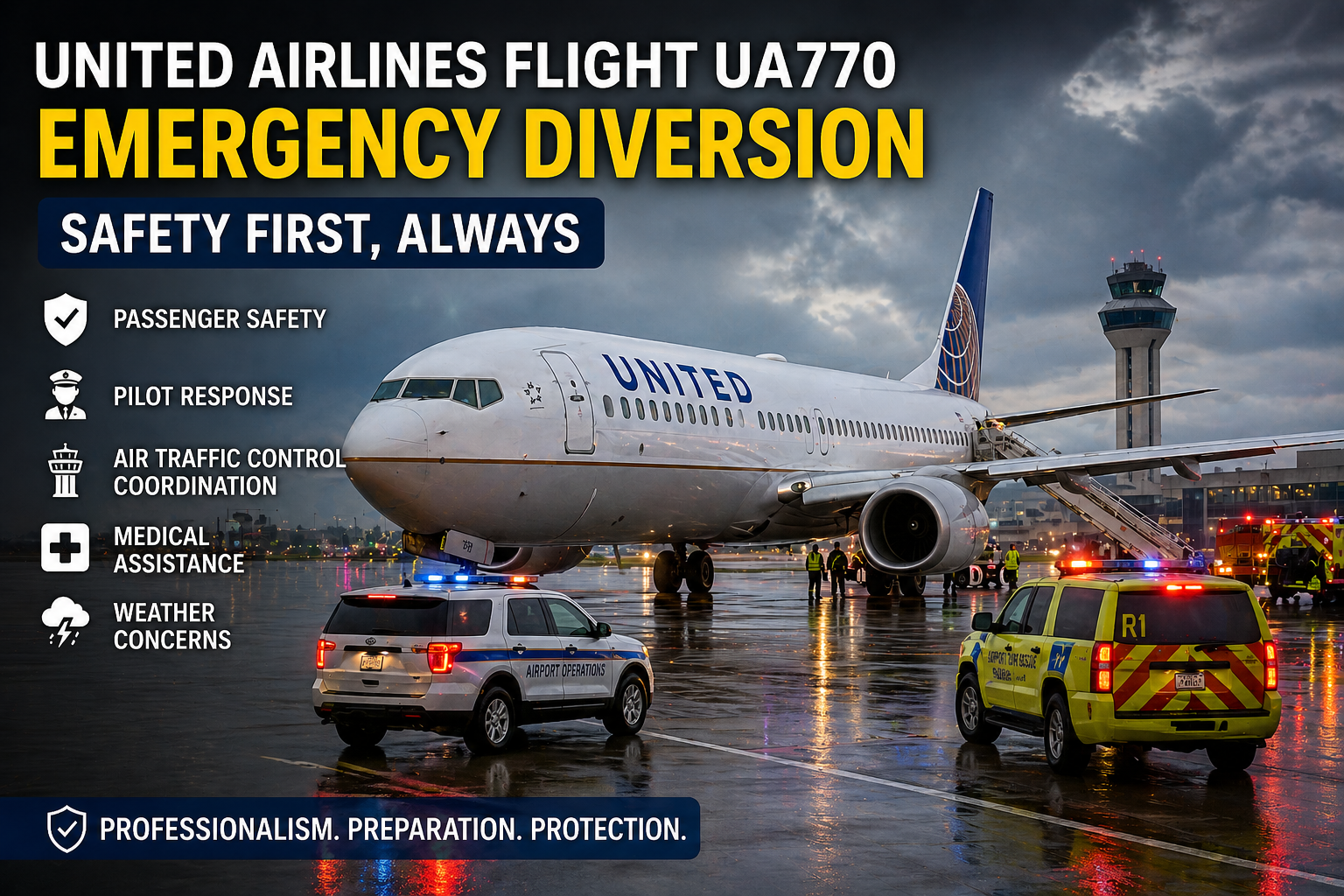
The emergency diversion of United Airlines flight UA770 has become a topic of discussion among travelers and aviation observers. Incidents like these may initially raise concern, but they actually demonstrate how effective modern aviation safety systems are. This comprehensive guide explores what emergency diversions mean, why they happen, how they are handled, and what passengers should understand about such events.
Understanding Emergency Diversion in Aviation
An emergency diversion occurs when an aircraft changes its planned route and lands at an alternative airport due to unexpected circumstances. Contrary to popular belief, not all diversions involve severe danger. In fact, many are precautionary measures taken to avoid potential risks.
Airlines such as United Airlines operate under strict international safety standards. Pilots are trained to prioritize passenger safety over all other factors, including schedules and operational costs.
Background of Flight UA770
Flight UA770 was operating as part of a routine commercial service. Like thousands of flights that take off daily around the world, everything is planned carefully—from fuel calculations to weather conditions. However, aviation is a dynamic environment, and unexpected situations can arise even during the most routine journeys.
When an irregularity is detected, pilots must decide whether it is safe to continue or whether a diversion is necessary. In the case of UA770, the diversion reflects a decision made in favor of safety.
Common Causes of Emergency Diversions
Emergency diversions can happen for various reasons. Some of the most common include:
1. Medical Emergencies
Passengers may experience sudden health issues such as heart attacks, breathing difficulties, or severe allergic reactions. Since medical facilities are limited onboard, pilots may divert the flight to ensure timely treatment.
2. Technical or Mechanical Issues
Aircraft systems are highly reliable, but no machine is completely immune to faults. Warning indicators, unusual sounds, or system irregularities can prompt pilots to land at the nearest suitable airport.
3. Weather-Related Challenges
Severe weather conditions such as thunderstorms, turbulence, or heavy fog can make it unsafe to proceed. Pilots rely on weather radar and updates to make decisions that minimize risk.
4. Security Concerns
Although rare, any potential security threat is taken very seriously. Diversion allows authorities to address the situation on the ground.
5. Operational Factors
Sometimes, logistical issues such as fuel imbalances or airport congestion may also contribute to a diversion decision.
Pilot Decision-Making Process
The decision to divert a flight like UA770 is never taken lightly. Pilots follow a structured approach:
- Situation Analysis: Understanding the severity of the issue
- Risk Assessment: Evaluating potential dangers of continuing the flight
- Consultation: Communicating with airline operations and air traffic control
- Decision Execution: Selecting the best alternate airport
Pilots undergo rigorous simulator training to prepare for such situations, ensuring they remain calm and effective under pressure.
Role of Cabin Crew During Emergencies
Cabin crew members play a crucial role in maintaining order and safety during an emergency diversion. Their responsibilities include:
- Communicating clearly with passengers
- Ensuring compliance with safety instructions
- Providing assistance to affected individuals
- Managing panic or anxiety among passengers
Their training ensures that even stressful situations are handled professionally.
Air Traffic Control Coordination
Air Traffic Control (ATC) is essential in managing emergency situations. Once a diversion is declared, ATC:
- Grants priority landing clearance
- Clears airspace to avoid delays
- Coordinates emergency services on the ground
This collaboration ensures a smooth and safe landing process.
Passenger Experience and Reaction
For passengers, an emergency diversion can be unsettling. However, clear communication from the crew helps reduce anxiety. Most passengers cooperate with safety instructions and remain calm throughout the process.
Airlines typically provide support after landing, including:
- Rebooking on alternative flights
- Accommodation if required
- Customer service assistance
Aviation Safety Systems and Protocols
Incidents like the diversion of UA770 highlight the strength of aviation safety systems. Key components include:
- Regular Maintenance Checks: Aircraft are inspected frequently
- Pilot Training Programs: Continuous training for emergency scenarios
- Advanced Technology: Real-time monitoring of aircraft systems
- Strict Regulations: Compliance with international aviation authorities
These systems work together to minimize risks and ensure passenger safety.
Impact on Airline Operations
While safety is the top priority, diversions can affect airline schedules and operations. Delays, cancellations, and logistical challenges may occur. However, airlines like United Airlines have contingency plans to handle such disruptions efficiently.
Lessons Learned from the Incident
Every emergency diversion provides valuable insights for the aviation industry. Investigations focus on:
- Identifying the root cause
- Evaluating response effectiveness
- Improving future procedures
This continuous improvement process is one of the reasons aviation safety keeps advancing.
Why Emergency Diversions Are a Good Sign
Although the term “emergency” may sound alarming, diversions are actually a positive indication of a functioning safety system. They show that:
- Pilots are proactive in risk management
- Airlines prioritize safety over convenience
- Systems are in place to handle unexpected situations
Conclusion
The emergency diversion of UA770 serves as a powerful example of how modern aviation prioritizes safety. Whether caused by medical, technical, or environmental factors, such decisions are made with careful consideration and professionalism.
Air travel continues to be one of the safest forms of transportation, thanks to strict protocols followed by airlines like United Airlines. Rather than being a cause for concern, incidents like these should build trust in the systems designed to protect passengers.